Easy Lunches for Workdays
Published February 2026 - Educational content
Workday Lunch Considerations
The midday meal during workdays presents unique considerations. Many people seek lunch options that can be prepared quickly, transported if necessary, and consumed within limited time frames. This article explores common concepts and approaches related to workday lunch preparation.
Common Lunch Formats
Several lunch formats appear frequently in discussions of workday meals:
Grain bowls typically combine a base of cooked grains with vegetables, protein sources, and sometimes a dressing or sauce. Sandwiches or wraps use bread or tortillas to enclose various fillings including vegetables, proteins, and spreads. Salads incorporate mixed vegetables with additional ingredients like proteins, grains, nuts, or cheese. Leftovers from previous dinners offer a preparation-free lunch option.
These formats represent common approaches rather than prescriptions for any individual.
Components of Balanced Lunches
Educational discussions of balanced meals often mention including multiple food groups. For lunch, this might involve combining vegetables or fruits with sources of carbohydrates and proteins.
Vegetables can include leafy greens, tomatoes, cucumbers, peppers, carrots, or other raw or cooked options. Carbohydrate sources might be whole grain bread, brown rice, quinoa, whole wheat pasta, or similar options. Protein components could include beans, lentils, eggs, chicken, fish, tofu, or other sources depending on dietary patterns.
The specific combinations any individual chooses depend on their preferences, dietary patterns, and available ingredients.
Preparation Strategies
People employ various strategies to manage workday lunch preparation:
Batch cooking involves preparing larger quantities of certain components like grains or proteins that can be used across multiple lunches throughout the week. Assembly-style preparation means keeping various prepared components separate and combining them shortly before eating. Modular meal planning involves preparing a few different elements that can be combined in various ways to create different lunches. Using previous dinner leftovers eliminates the need for separate lunch preparation.
Different strategies work for different individuals based on their schedules, kitchen access, and preferences.
Portable Lunch Considerations
For those who eat lunch away from their home kitchen, portability becomes relevant. Factors affecting portability include the need for temperature control for perishable ingredients, whether the lunch needs to be consumed cold or can be reheated, how well the components travel without becoming soggy or mixed unintentionally, and ease of eating in workplace settings.
Some lunch options like grain bowls or salads in sealed containers travel well. Sandwiches are traditionally portable but may become soggy depending on ingredients and timing. Soups require appropriate containers to prevent leaking.
Quick-Assembly Lunch Ideas
Various lunch options can be assembled quickly from prepared or minimally prepared ingredients:
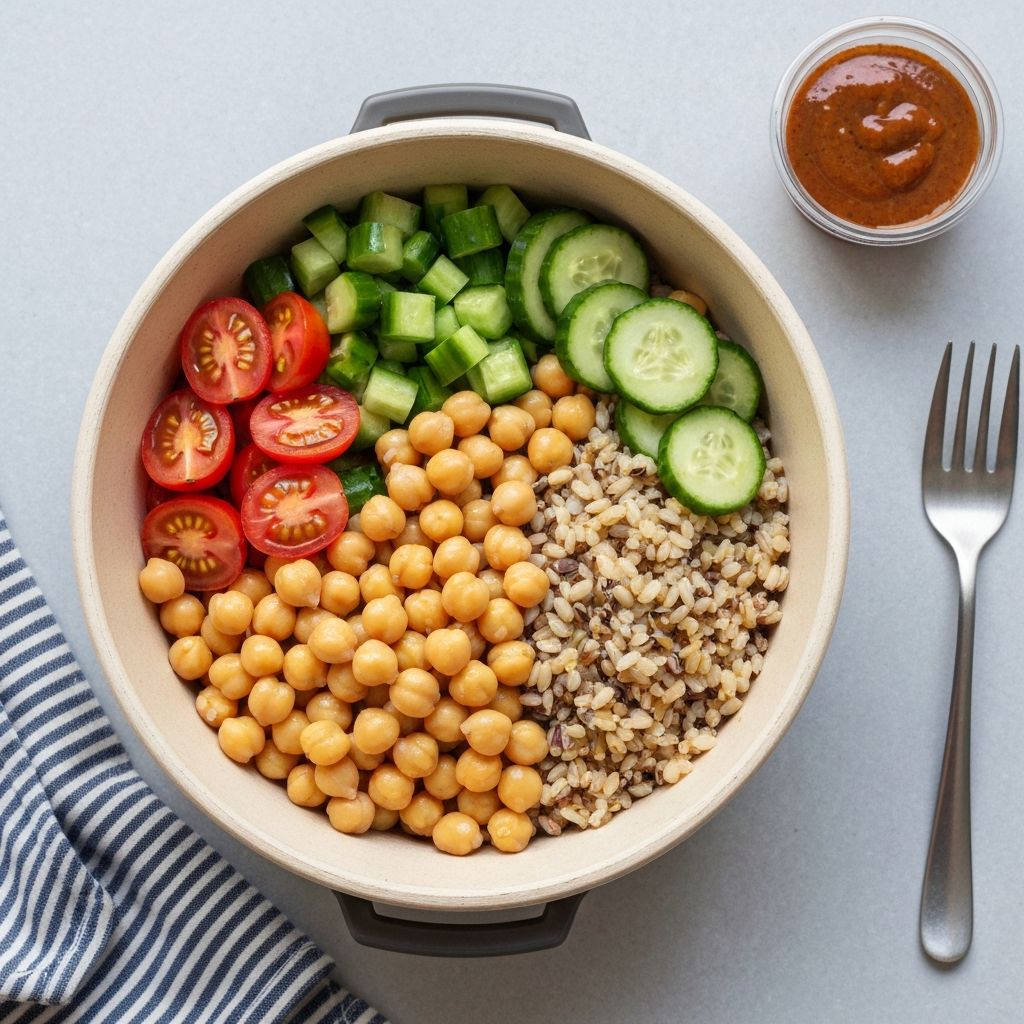
A grain bowl might combine pre-cooked quinoa or rice with pre-washed salad greens, canned chickpeas, sliced vegetables, and a simple oil and vinegar dressing. A wrap could include whole wheat tortilla, hummus, sliced vegetables, and leafy greens. A salad might feature mixed greens, cherry tomatoes, cucumber, leftover grilled chicken, and nuts. A sandwich could combine whole grain bread with vegetables, cheese, and greens.
These examples illustrate common lunch concepts but are not recommendations for specific individuals.
Ingredient Versatility
Certain ingredients appear frequently in workday lunch preparations due to their versatility:
Leafy greens work in salads, wraps, sandwiches, and bowls. Cooked grains serve as bases for bowls or as sandwich side items. Hard-boiled eggs add protein to various lunch formats. Canned beans or chickpeas offer convenient protein and can be added to many preparations. Cherry tomatoes, cucumbers, and peppers require no cooking and add freshness.
Keeping versatile ingredients available can facilitate quick lunch assembly.
Temperature and Storage
Food safety considerations affect how lunches can be prepared and stored. Perishable ingredients generally need to be kept cold until consumption. Some people use insulated lunch bags with ice packs for this purpose. Alternatively, workplace refrigerators can store lunches until midday.
Some lunch options like grain bowls can be enjoyed at room temperature, while others benefit from reheating. Access to workplace microwaves influences which lunch options are practical for different individuals.
Variety and Rotation
Rotating between different lunch formats and ingredient combinations throughout the week can provide nutritional variety and prevent meal fatigue. Some people designate different days for different lunch types, such as salad days and sandwich days. Others vary their lunch preparations based on available leftovers or seasonal ingredients.
The degree of variety any individual incorporates into their lunch routine is a personal preference influenced by their interest in food variety and time available for preparation.
Educational Information and Context
This article provides general educational information about workday lunch concepts and is not personalized advice for any individual. Nutritional needs vary widely between people based on factors including age, activity level, health status, and personal preferences.
The lunch ideas described represent common approaches but should not be interpreted as recommendations specific to your circumstances. Individual dietary decisions are personal and where appropriate may involve consultation with qualified professionals.